Why the Smartest TikTok Shop Brands Use Both

There's a false choice happening on TikTok Shop right now. Brands keep asking some version of the same question: should we invest in product seeding, or move straight into paid creator retainers?
The real answer is that the question is set up wrong. Asking whether you need product seeding vs creator retainers is like asking whether a company needs R&D or production. You need both. They just do different jobs inside your growth engine, in a specific order. Here's how the two fit together, and what each one is actually for.
Sampling Is Signal Discovery, Not Scale
Sampling isn't a scale play. It's intelligence gathering.
When you send 500 to 1,000 products out into the creator ecosystem, you're not buying content. You're buying signal. Specifically, you're learning:
Which creators can actually convert, not just rack up views
Which hooks stop the scroll in your category
Which content formats drive clicks through to the product page
Which audiences lean in versus scroll past
Which angles generate comments, saves, and real purchase intent
Most brands misread this stage. They treat sampling like a performance channel and judge it on immediate ROI. It isn't one. It's a filtering mechanism, and it's supposed to be unpredictable.
Out of 500 to 1,000 units sent (call it $5K to $20K in product cost), maybe 10 to 30 creators produce videos worth amplifying. That means each video worth keeping can effectively cost $165 to $500 or more once you factor in product, shipping, coordination, and ops.
That's not inefficiency. That's research cost. Sampling is your creative R&D lab, and the failed samples are how you find the winners.
Retainers Are Structured Scale
Once you know what converts, you systemize it. That's the job retainers do.
Retainers aren't about "more creators." They're about controlled output velocity, taking the formats sampling proved out and producing them on a predictable schedule. A proper retainer structure usually looks like:
20 to 40 performance-aligned creators
15 to 30 deliverables per creator per month
300 to 1,200 measurable videos monthly
Hooks already pre-tested in the sampling phase
Product-page angles aligned to what converts
Clear iteration loops built in
Typical budgets run $10K to $20K a month, and at that volume the cost per video often drops below $100. At this point you're not guessing anymore. You're compounding.
The catch: retainers only work if the infrastructure exists underneath them. You need GMV tracking, creator-level attribution, internal sourcing and vetting systems, weekly feedback loops, structured briefs, and performance dashboards. Without that scaffolding, retainers turn into expensive noise. With it, they become a predictable revenue engine.
How We Choose Retainer Creators
This is where most brands go wrong. They pick creators based on follower count. We pick based on performance data.
The quantitative filters we run:
GMV in the last 30 days
Category-level conversion
Average views per post
Engagement rate
Posting consistency
Historical affiliate performance
The qualitative filters that follow:
Brand fit
Tonal alignment
Storytelling ability
Authenticity under conversion pressure
Hook strength in the first three seconds
You're not buying influence. You're buying conversion behavior. A creator with a modest following and a track record of moving product beats a big account that's never sold anything in your category.
The Growth Flywheel: How Sampling and Retainers Compound
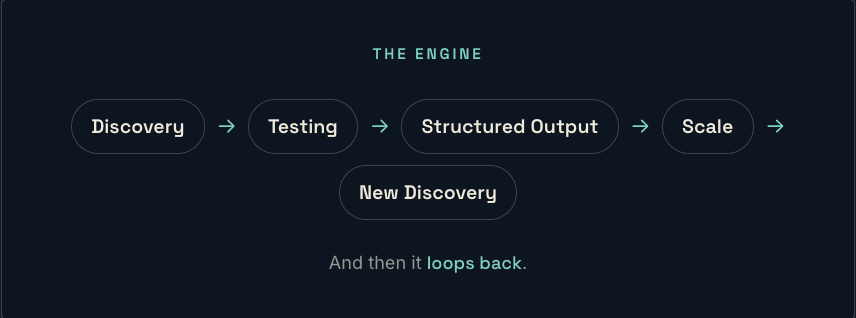
Sampling and retainers aren't alternatives. They're sequential levers inside one system, and the output of each feeds the next.
It runs as a loop. Sampling surfaces the creators, hooks, and angles that convert. Those proven inputs feed your retainer roster, which produces winning content at volume. The retainer data then tells you what to test next, which sharpens the next round of sampling, which feeds back into the roster again. Each pass makes the next one cheaper and more accurate. That's the flywheel: research lowers the cost of scale, and scale funds smarter research.
Brands that treat the two as an either/or break the loop before it can spin. Run them in sequence and they compound.
Frequently Asked Questions
Should I do product seeding or creator retainers first? Seeding first. Sampling is how you discover which creators, hooks, and formats convert in your category. Retainers are how you scale what sampling proved. Skipping the discovery phase means paying retainer rates to guess.
How much does product seeding cost on TikTok Shop? Sending 500 to 1,000 units typically runs $5K to $20K in product cost. Only a handful of those samples produce content worth amplifying, so treat it as research spend, not a performance channel.
How much do creator retainers cost? A structured retainer program of 20 to 40 creators usually runs $10K to $20K a month. At that volume, cost per video often falls below $100.
How should I choose retainer creators? By performance data, not follower count. Look at recent GMV, category conversion, engagement, and posting consistency first, then qualitative fit like storytelling and hook strength.
Want a Sampling-to-Retainer System Built for Your Brand?
We run both halves of this engine for beauty and commerce brands: sampling to find what converts, retainers to scale it, and the attribution to keep the flywheel turning. Book a strategy call with Commerce Social and we'll map it to your catalog and GMV goals.